English/Writing

Langwith Bassett Primary Academy believes that developing strong English skills is essential for progressing through the curriculum and preparing for adult life. All teachers have a responsibility to develop pupils’ competence in reading, writing, speaking and listening and to ensure that pupils build the language skills necessary to fully access the curriculum.
We recognise the effect that a fluent, legible and coherent writing style can have on pupils’ progress, both inside and outside the school environment. At our school, we provide a broad and balanced literacy curriculum which encompasses focussed writing practice, including handwriting, phonics, spelling, widening vocabulary, and writing for different styles, purposes and audiences.
English Lessons
Langwith Bassett Primary Academy follows the Rising Stars: Reading into Writing (RitW) scheme of work for teaching English. English lessons occur daily. The texts that are studied in the RitW curriculum have been carefully selected to give pupils a breadth of reading experience that includes exploration of themes, philosophical questions, context, the pupil’s own experiences as well as the emotional journey the characters go on in the stories. Thus, RitW helps pupils to develop in the ways intended for the purpose of study, whilst acquiring knowledge and broadening their vocabulary, using all that they learn to express themselves in writing. In this way, RitW develops children’s understanding of themselves, others and the world.
We follow a two-year cycle due to our mixed age classes. Please click on the link below to view.
SPaG
During the Autumn Term, all English lessons place a strong emphasis on SPaG (Spelling, Punctuation and Grammar). This focused approach helps children develop the essential skills needed for successful writing, ensuring they have secure foundations before applying their knowledge across a range of writing genres. By strengthening their understanding of language conventions, pupils gain the confidence and accuracy needed to become effective and independent writers.
Spelling
Langwith Bassett Primary Academy believes that foundations for spelling should be put in place from an early age. Within Reception and KS1 the focus is on phonics and pupils are immersed in the world of phonics (closely linked to their early reading development) as soon as they enter school and access a daily phonics lesson.
In Key Stage 1, children’s spelling development is closely linked to their phonics learning. Weekly spelling activities focus on phonics patterns, high-frequency words and common exception words, helping pupils to build confidence and accuracy in both reading and writing. These spelling patterns and words are revisited regularly to ensure secure understanding and long-term retention.
In Key Stage 2, we use the Spelling Ninja scheme to support the teaching and learning of spelling. Spelling rules and patterns are taught explicitly and then practised throughout the week through a range of engaging activities. This approach helps children develop a deeper understanding of spelling conventions while extending their vocabulary and improving their writing across the curriculum.
Handwriting
At Langwith Bassett Primary Academy, we strive for all pupils to achieve high standards of handwriting and presentation in their work. We encourage children to take pride in their writing and believe that high-quality presentation helps to develop confidence, motivation and a positive attitude towards writing. When pupils are proud of their work, they are more likely to engage enthusiastically in writing and develop as independent, resilient writers.
The development of fine motor skills and a correct pencil grip is fundamental to successful handwriting. In Nursery and Reception, children take part in a daily Dough Disco session. These fun and engaging activities are designed to strengthen finger and hand muscles, helping children to develop the control and coordination needed for effective pencil use and handwriting.
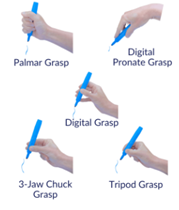
Pencil grips develop through a number of stages as children grow and develop. Children are assessed on their initial pencil grip and are encouraged to progress through the developmental stages towards establishing a secure tripod grip in their dominant hand. In the younger year groups, and where necessary across the school, children’s pencil grip and fine motor skills are monitored regularly. Where additional support is required, targeted fine motor interventions are put in place.
At Langwith Bassett Primary Academy, we follow the ACET Handwriting Plan, which provides a clear and consistent approach to the development of handwriting skills across the school. Handwriting is taught daily, with each class aiming to complete one dedicated handwriting session each day. Teachers also use handwriting to reinforce spelling and vice versa, helping children to make links between the two aspects of writing. During lessons, teachers provide individual guidance and feedback on letter formation, posture, and pencil or pen grip to support pupils in developing a fluent, legible and increasingly joined handwriting style.
As children begin to learn correct letter formation, they are taught handwriting rhymes to help them remember the shape and formation of each letter. These rhymes are used consistently throughout the school to support a shared approach to handwriting. Please click on the links below to view our long-term handwriting plans.